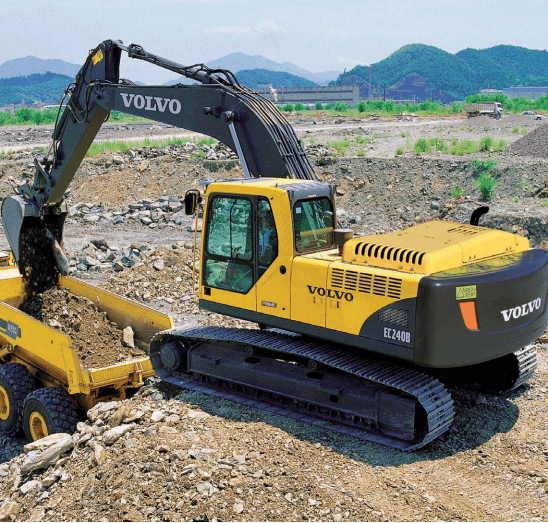
Volvo excavator parts have always been favored by operators in the excavator industry. The after – sales service and quality of Volvo excavator parts purchased by many people are more guaranteed than those of some small manufacturers. However, no matter how good they are, malfunctions are inevitable after long – term use. Knowing more about the causes of cracks in engine blocks and cylinder heads is hoped to be helpful to you.
I. Reasons for cracks in Volvo excavator cylinder parts
The parts of the engine cylinder block and cylinder head that are prone to cracking are usually related to their structure. The parts prone to cracking in different types of engines have their own patterns. Engine blocks and cylinder heads are usually cast from gray cast iron, alloy cast iron, and aluminum alloy. Their structures are complex, and they operate under high – temperature, high – pressure, thermal load, and alternating load conditions. Therefore, sand holes and cracks often occur in the cylinder block and cylinder head.
II. Solutions for cracks in Volvo excavator cylinder parts
- The engine has high power and speed. At high speeds, the inertial force is large, the stress on the bottom plate is high, and cracks are likely to occur.
- The cylinder block has a complex structure and uneven wall thickness. Due to its low stiffness, cracks are likely to occur in some weak parts.
- At high speeds, the crankshaft vibrates, which increases the load on the cylinder block and causes cracks in weak parts.
- Stress concentration occurs at the transition between machined parts and unmachined parts with different wall thicknesses. When stress concentration is superimposed with the residual internal stress in casting, cracks are likely to occur.
- If the engine operates under overload for a long time, the stress in the cylinder block is too high, and the proportion of cracks in the cylinder block is large.
- Suddenly adding cold water to the engine at high temperature causes excessive thermal stress in the cylinder block, resulting in cylinder block deformation and rupture.
- Excessive thickness of water dirt in the water jacket reduces the passage of cooling water. At the same time, due to poor heat transfer of water dirt, the heat – dissipation performance of the engine is reduced. Especially after the water passage between the cylinder and the valve is blocked, its heat – dissipation is seriously affected, causing the local operating temperature to rise and the thermal stress to be too high. This is likely to occur in severe winter seasons and burst due to the sudden addition of high – temperature hot water.
- The technical requirements of repair operations are not strictly implemented. For example, the cylinder head bolts are not tightened in the specified order and torque, and the tightening force is uneven, resulting in cylinder deformation and cracks near the bolt hole
- s.
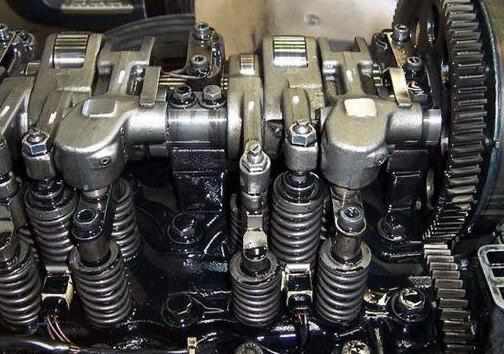
Through the above explanation, you have a certain understanding of the causes of crack failures in engine blocks and cylinder heads. You must remember to refer to it in daily use to avoid similar situations and affect the use.