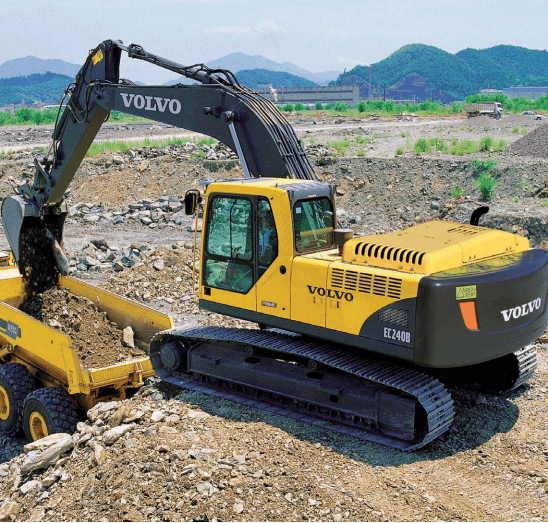
This document is for reference only and does not target any specific brand or product.
To evaluate the performance of various excavator control units (such as ECU, EECU, and IECU), verification can be conducted through multiple scenarios, including actual operation performance, fault feedback, and environmental adaptability. Combined with real cases of mainstream brands like Komatsu, Caterpillar, SANY, and Volvo, the following sections detail how to distinguish between high-quality and low-quality control units from the perspectives of performance, fault diagnosis, and environmental adaptability, with strong practical applicability:
Caterpillar 320D: Operational Contrast Between High-Quality and Low-Quality Circuit Boards (Control Units)
Case 1: High-Quality Control Unit
In a large-scale earthwork project, a Caterpillar 320D excavator equipped with an original equipment manufacturer (OEM) circuit board could accurately adapt to different working conditions. When operating in soft soil, the control unit detected low digging resistance via sensors and automatically switched to a low-power economic mode, reducing fuel consumption by 15% compared to other equipment of the same class. For heavy-duty mining and rock-breaking tasks, it quickly increased the engine’s output torque, ensuring a stable operation volume of 200–300 cubic meters per hour—10%–20% more efficient than standard equipment of the same type.
Additionally, during a subway tunnel construction project, the control unit detected an abnormal rise in hydraulic oil temperature and immediately triggered an alarm on the display. Maintenance personnel promptly cleaned debris from the radiator based on this alert, preventing hydraulic system damage and demonstrating strong fault early-warning capability.

Case 2: Low-Quality Control Unit
Another Caterpillar 320D had its damaged OEM circuit board replaced with a low-cost alternative from an unauthorized source. From the initial use stage, the excavator frequently experienced engine idling with no response from digging actions, and no warning lights activated on the instrument panel. Maintenance inspections revealed that loose soldering on the internal pins of the low-quality control unit prevented the hydraulic system from receiving commands.
This fault delayed the project for several hours. Later, due to the control unit’s inability to accurately regulate power, fuel consumption surged by 30%, and digging actions became jerky. The unit was completely scrapped after 3 months of use due to circuit burnout.

SANY SY19E: Verification of Quality Advantages of Integrated Control Units
The all-in-one integrated control unit equipped in the SANY SY19E mini electric excavator is a typical example of a high-quality control unit. This unit integrates multiple functions, including an electric drive MCU, a charging OBC, and a low-voltage power supply DCDC. Compared to traditional distributed control units, it has a smaller size and stronger compatibility.
In an indoor renovation project at a food factory, the control unit worked in synergy with the SLSS hydraulic system to precisely control flow based on load changes. It exhibited excellent micro-control of the bucket, enabling accurate corner digging in narrow spaces. Meanwhile, paired with an intelligent thermal management controller, the equipment maintained stable temperatures during long-hour operations, with no fault alarms reported even after 8 consecutive hours of work.
In contrast, competing equipment of the same tonnage equipped with standard control units frequently experienced action delays. Moreover, due to poor heat dissipation of their control units, these competitors repeatedly triggered shutdown protection due to overheating. This comparison highlights the quality advantages of SANY’s integrated control unit in terms of performance stability and integration level.

Volvo Excavators: Comparison of Control Units’ Environmental Adaptability
In a Volvo excavator project at a port, two units were installed with an OEM control unit and a third-party counterfeit control unit, respectively, for leveling operations in cargo handling areas. The port environment is characterized by high humidity and frequent salt spray corrosion.
The OEM control unit featured an IP67 protection rating with a sealed design, an anti-corrosion-treated housing, and a moisture-proof coating on internal circuits. Over 2 years of use, it only experienced one minor signal fluctuation, which was diagnosed as poor wire harness contact—unrelated to the control unit itself.
In contrast, the excavator with the counterfeit control unit began experiencing frequent communication faults after 6 months of use, with continuous alarms on the instrument panel. Disassembly inspections revealed that the counterfeit unit’s housing had poor sealing; salt spray intrusion caused corrosion of internal circuit boards and oxidation-induced pin breakage. Additionally, the counterfeit control unit could not adapt to the port’s high-frequency vibration conditions. During vibrations caused by heavy cargo handling, data transmission was interrupted multiple times, leading to incorrect actions of the hydraulic system. Eventually, the counterfeit unit was replaced with an OEM one due to irreparable damage.

A Doosan excavator suddenly shut down during operation, with the instrument panel displaying “ECU communication error” and “abnormal generator voltage.” The excavator failed to restart afterward. Maintenance personnel followed standard troubleshooting procedures:
Confirmed that the battery voltage and fuses were normal.
Doosan Excavators: Identifying Control Unit Quality Through Fault Diagnosis
Checked the ECU terminal and found that the voltage from the emergency shutdown circuit to the ECU was 0V (the standard voltage should be 25V).
Ultimately identified worn wire harnesses as the cause of ECU power failure.
At this point, the advantage of the high-quality control unit became evident: after the power failure was resolved and the wire harnesses were reconnected, the OEM ECU immediately resumed normal operation without any data confusion or performance degradation. All parameters remained stable in subsequent operations.
Previously, another Doosan excavator with a low-quality ECU encountered a similar wire harness short-circuit fault. After the fault was fixed, the low-quality ECU still frequently experienced fuel injection signal disorders. It was eventually confirmed that the low-quality unit’s internal circuits had poor anti-shock capability, resulting in irreversible damage during the short circuit. This case demonstrates that low-quality control units are far inferior to high-quality ones in terms of fault resistance.

Case New Holland Smart Power System-Matched Control Unit: Integrated Design Demonstrates High-Quality Performance
A piece of construction equipment was equipped with the Case New Holland CSP smart power system, whose matched control unit is integrated with a digital electronic control pump. This control unit supports functions such as electronic anti-stall and adaptive torque control. During complex operations, it enables precise matching between the hydraulic pump’s power absorption and the engine’s available power.
For example, during heavy-duty digging, the control unit can adjust hydraulic system parameters in real time, allowing the equipment to operate stably under a system pressure of 315 bar without power interruptions or abnormal pressure issues. Compared to standard equipment with a separate pump and ECU design, this integrated control unit not only simplifies layout but also reduces signal transmission delay, improving operational efficiency by 20%.
In contrast, excavators of the same type equipped with standard control units frequently experienced engine speed drops and jerky hydraulic actions under high-pressure conditions. Moreover, their fuel consumption was 18% higher than that of equipment with the Case New Holland control unit. This highlights the core advantages of high-quality control units in system synergy and precise regulation