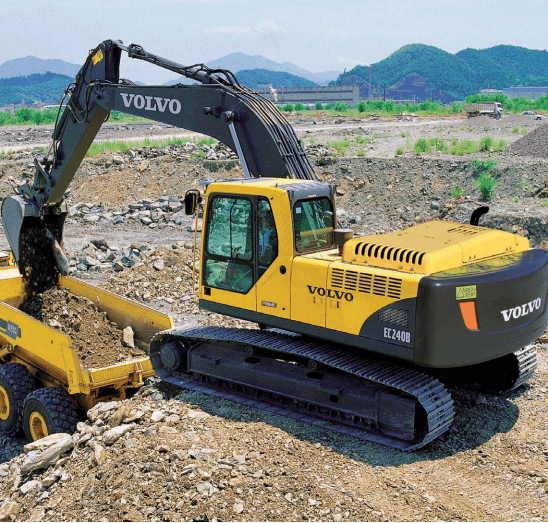
Here is a set of practical diagnostic methods usable by both machine owners and repair technicians, allowing a rough assessment—without professional equipment—of whether an excavator’s electronic control unit (ECU) is repairable or must be replaced.
I. First Rule Out Non-ECU Faults
Many symptoms resembling ECU failure are actually external issues. Perform these checks first:
Is the battery voltage normal?
If voltage drops below 21V during startup, the ECU may trigger false alarms, fail to start, or shut down the engine.
Are the main relay or fuses blown?
Unstable power supply to the ECU is the most common issue.
Are connectors water-damaged, corroded, or loose?
Unplug them and check for moisture or green copper oxidation.
Are sensors short-circuited?
Short circuits in RPM, pressure, or throttle sensors can pull down the ECU’s 5V power supply, causing alarms and stalling.
If power supply, wiring, and sensors are normal but the ECU still malfunctions → the ECU itself is likely defective.
II. These Symptoms Almost Confirm ECU Failure
Monitor black screen, no communication, no response
Power is normal but the display is completely off or shows “ECU Not Connected”.
Power on but engine fails to start
Sufficient power, fuel, and compression, but the starter cranks without starting.
Persistent fault codes that cannot be cleared
Such as Komatsu CA187, Caterpillar 1289, Kobelco P1/P2; codes reappear immediately after clearing.
5V sensor power shorted to ground
Short circuit remains even after disconnecting all sensors → internal ECU power chip is burnt.
Abnormal functions, automatic stalling, erratic movements
Random stalling, automatic boom lifting, automatic bucket retraction; after ruling out hydraulic issues, the ECU is at fault.
Visible physical damage
Obvious water ingress, burning, bulging components, or burnt odors → generally not repairable, replace directly.
III. Key Judgment: Repairable vs. Must Replace
- Repairable (No Replacement Needed)
Only power chips, driver transistors, or communication chips are burnt
Water damage but CPU intact
Powers up and communicates normally, with only partial function failure
Fixed fault codes but system access is available
Typical repair cost: several hundred to 2,000 RMB - Must Replace (Unrepairable)
Burnt CPU / main chip (the most common “terminal fault”)
Burned-through circuit board, broken copper traces, extensive corrosion
Severe water damage with fully oxidized components
ECU locked or VIN-bound with no unlock solution
Obsolete model ECU discontinued, no replacement chips available
IV. Simplest Quick Diagnostic Flow (For Machine Owners)
Check battery, fuses, and connectors
Disconnect all sensors and see if faults disappear
If faults persist → ECU is defective
Open the ECU to inspect for water damage or burn marks
Repair shop assessment:
Repairable → proceed with repair
Unrepairable / repair quote near cost of new unit → replace directly
V. When to Replace with a New ECU Without Hesitation
The excavator is your primary working machine, with high daily downtime losses
The ECU has failed repeatedly after multiple repairs
Repair quote exceeds half the cost of a new ECU
High risks with used ECUs, fear of buying locked units